
Two Minutes with Rubina Romanelli
From Purchase to Preservation: Strategic Art Management that Protects Value in a Shifting Market
I come from a Florentine family of sculptors and gallerists spanning several generations. Having been surrounded by art my entire life I have worked in the art world for over twenty years. Art management has always been a central role across my career. Since joining Stonehage Fleming, I have come to understand art management in an even broader sense: as a long-term commitment that requires strategic vision.
Several key trends have shaped the art market over the past five years. Interest in women artists – especially those previously unrecognised – has grown, alongside increased attention to artists from Africa and the African diaspora. Just to mention a few who continue to achieve great success: El Anatsui, Yinka Shonibare, Kerry James Marshall, Ibrahim Mahama, and Jeffrey Gibson. Among female artists, more established figures include Sonia Boyce, Lynette Yiadom-Boakye, and Simone Leigh, while younger artists include Njideka Akunyili Crosby, Iris Viktor, and Jadé Fadojutimi.
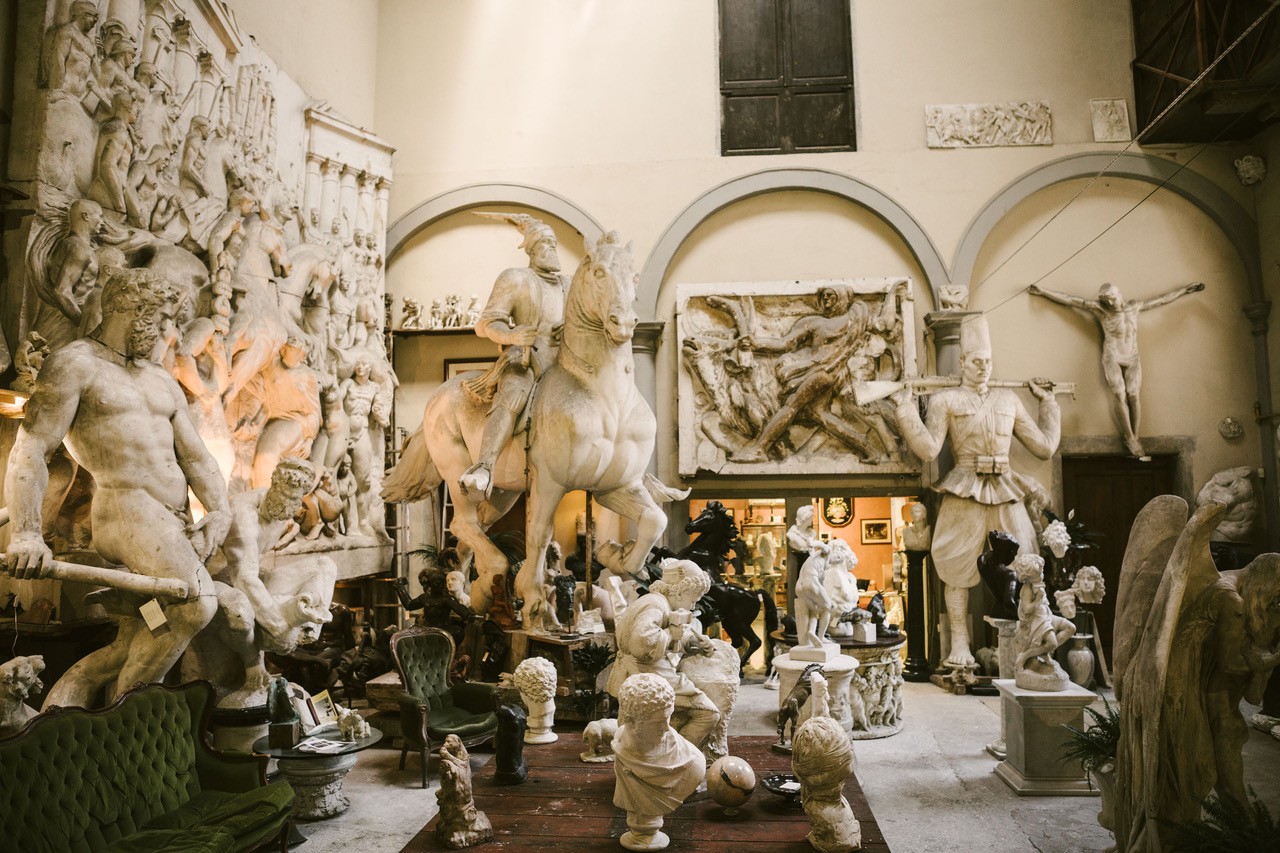
Studio Galleria Romanelli, Florence. Photography © Alessandro Taddeini.
Many collectors focus on buying and neglect to consider the post-purchase life of an artwork. By attending to the more ‘invisible’ aspects of art ownership, collectors can ensure that their works are protected for the future. Due diligence prior to purchase, proper logistics, archiving, conservation planning, and insurance management all serve to safeguard a collector’s investment. Neglecting these elements can lead to a loss of value or even render a work unsellable. Strategic guidance on loans, exhibitions, and potential acquisitions or sales can further enhance both the value and visibility of a collection.
In terms of current artists, I am a fan of the work of Chiara Camoni. I am very much looking forward to seeing her next project, curated by Cecilia Canziani, at the next Venice Biennale. Camoni’s practice is both delicate and bold, weaving together natural elements, ceramics, and textiles. It possesses a shamanic quality, and I am particularly intrigued to see how she will engage with and respond to the vast scale of the Italian Pavilion.
Art can tell us so much about society at large. Art is always contemporary, as it has always been made in the present. Inevitably, therefore, it is connected to a historical, social, and political context. While it may not reflect reality directly, it often reveals deeper truths and offers new perspectives on the world.
Rubina Romanelli is an Art Consultant to the Stonehage Fleming Art Management team, who has been working with the Group since 2022. She manages the collections of international ultra-high net worth families and has more than 20 years of experience working in the art world.